Back to integrations
Apify and ChartMogul integration
Save yourself the work of writing custom integrations for Apify and ChartMogul and use n8n instead. Build adaptable and scalable workflows that work with your technology stack. All within a building experience you will love.



How to connect Apify and ChartMogul
Create a new workflow and add the first step
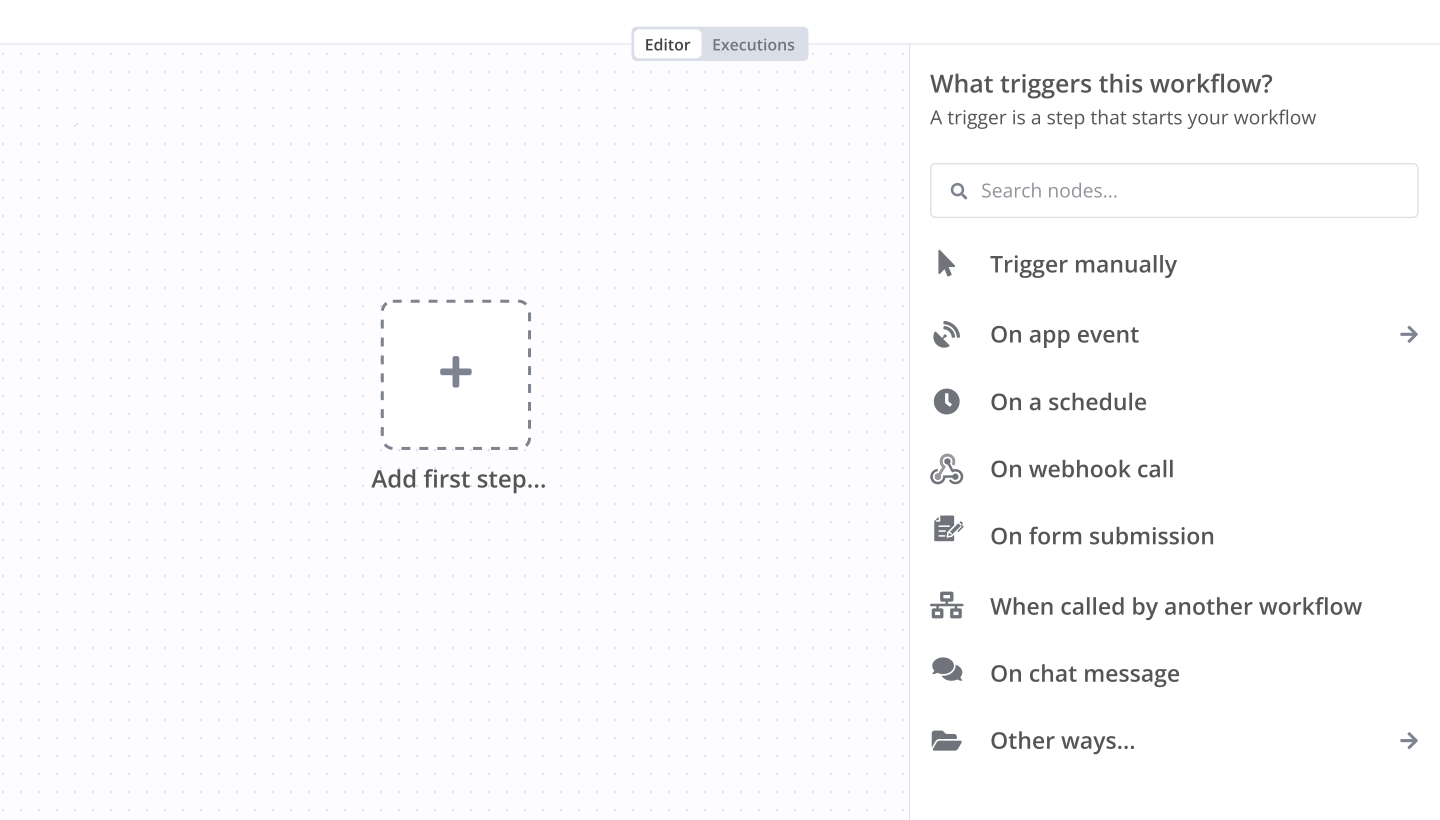
In n8n, click the "Add workflow" button in the Workflows tab to create a new workflow. Add the starting point – a trigger on when your workflow should run: an app event, a schedule, a webhook call, another workflow, an AI chat, or a manual trigger. Sometimes, the HTTP Request node might already serve as your starting point.
Build your own Apify and ChartMogul integration
Create custom Apify and ChartMogul workflows by choosing triggers and actions. Nodes come with global operations and settings, as well as app-specific parameters that can be configured. You can also use the HTTP Request node to query data from any app or service with a REST API.
What can you do with Apify?
Run an Actor
Runs an Actor. You can override the Actor’s input configuration by providing a custom body, which will override the prefilled input values.
Run an Actor and Get Dataset
Runs an Actor, waits for it to finish, and finally returns the dataset items
Scrape Single URL
Scrape a single URL using the Apify Website Content Crawler Actor and get its content as text, markdown, and HTML
Get Last Run
Retrieves the most recent run of an Actor. This endpoint is useful for quickly accessing the latest run details, including its status and storages, without needing to specify a run ID.
Run Task
Runs an Actor Task and return all associated details. You can optionally override the Actor’s input configuration by providing a custom body.
Run Task and Get Dataset
Runs an Actor task, waits for it to finish, and finally returns the dataset items. You can optionally override the Actor’s input configuration by providing a custom body.
Get User Runs List
Gets a list of Actor runs for the user. This endpoint is useful for retrieving a history of runs, their statuses, and other data.
Get run
Gets the details of a specific Actor run by its ID. This endpoint is useful for retrieving information about a run, such as its status, storages, and other metadata.
Get runs
Gets a list of Actor runs. This endpoint is useful for retrieving a history of runs, their statuses, and other data.
Get Items
Retrieves items from a dataset
Get Key-Value Store Record
Gets a value stored in the key-value store under a specific key
Apify and ChartMogul integration details
FAQs
FAQ
Can Apify connect with ChartMogul?
Can I use Apify’s API with n8n?
Can I use ChartMogul’s API with n8n?
Is n8n secure for integrating Apify and ChartMogul?
How to get started with Apify and ChartMogul integration in n8n.io?
The world's most popular workflow automation platform for technical teams including





Why use n8n to integrate Apify with ChartMogul
Build complex workflows, really fast